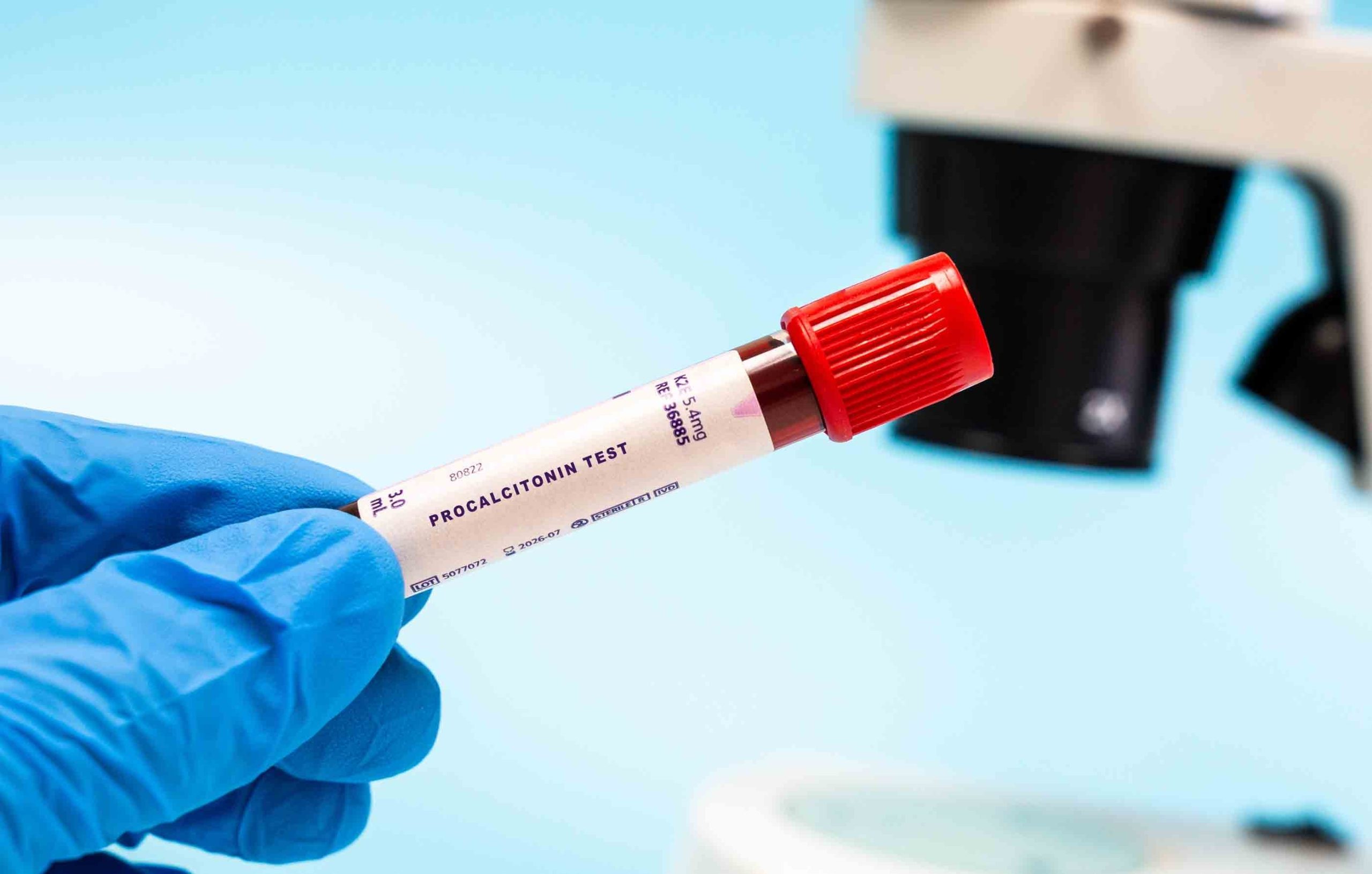
Procalcitonin
What is Procalcitonin?
Procalcitonin (PCT) is a peptide precursor of the hormone calcitonin, and it plays a significant role as a biomarker for bacterial infections, especially sepsis.
-
Normally produced in small amounts by the thyroid gland.
-
During systemic bacterial infections, many tissues in the body begin producing PCT in large quantities.
- Its levels rise rapidly (within 2–6 hours) in response to bacterial toxins and systemic inflammation
Why Is It Important in Sepsis?
-
Helps distinguish bacterial infections from viral or non-infectious causes of inflammation.
-
Higher levels of PCT are strongly associated with severe bacterial infections and sepsis.
-
It is used to:
Support early diagnose of sepsis
Monitor progression or resolution of infection
Interpreting Procalcitonin Levels
-
<0.5 ng/mL: Low risk of severe sepsis and/or septic shock
-
>2 ng/mL: High risk of severe sepsis and/or septic shock
Limitations
-
PCT can also rise in:
Major surgery
Severe trauma
Certain cancers -
It should not be used alone—clinical context and other tests are essential for accurate diagnosis.